 Pyramid of Giza Tours
Home › Guides › Great Sphinx of Giza: Size, Age and How to See It Beside the Pyramids
Great Sphinx of Giza: Size, Age and How to See It Beside the Pyramids
The Great Sphinx Of Giza did not lose its nose to Napoleon's cannons. The statue is 73 m long and 20 m high, carved from a single piece of Giza bedrock, and its nose was broken off centuries before Napoleon arrived in Egypt.
Quick answer Key facts about the Great Sphinx at a glance
The Great Sphinx of Giza is 73 m (240 ft) long and 20 m (66 ft) high, carved from one piece of limestone bedrock on the Giza Plateau. Most scholars date it to the reign of Khafre in the 4th dynasty, and it is the oldest known monumental sculpture in Egypt. It stands on the eastern edge of the plateau, close to the Pyramid of Khafre.
Key takeaways
- See it beside the pyramids on the Giza Pyramids and Sphinx Private Tour with a Camel Ride.
- Catch it at dawn on the Giza Pyramids Sunrise Tour with a Camel Ride and Breakfast.
- Pair the Sphinx with the Grand Egyptian Museum on the Giza Pyramids, Sphinx and Grand Egyptian Museum Tour with Lunch.
- Start planning with a full pyramid of giza tour overview of routes, prices and tickets.
What is the Great Sphinx of Giza and how big is it?
It is a colossal lion with a human head, carved from a single piece of limestone bedrock on the Giza Plateau.
The Sphinx is the oldest known monumental sculpture in Egypt and one of the largest statues ever carved from one stone. Its size surprises most visitors.
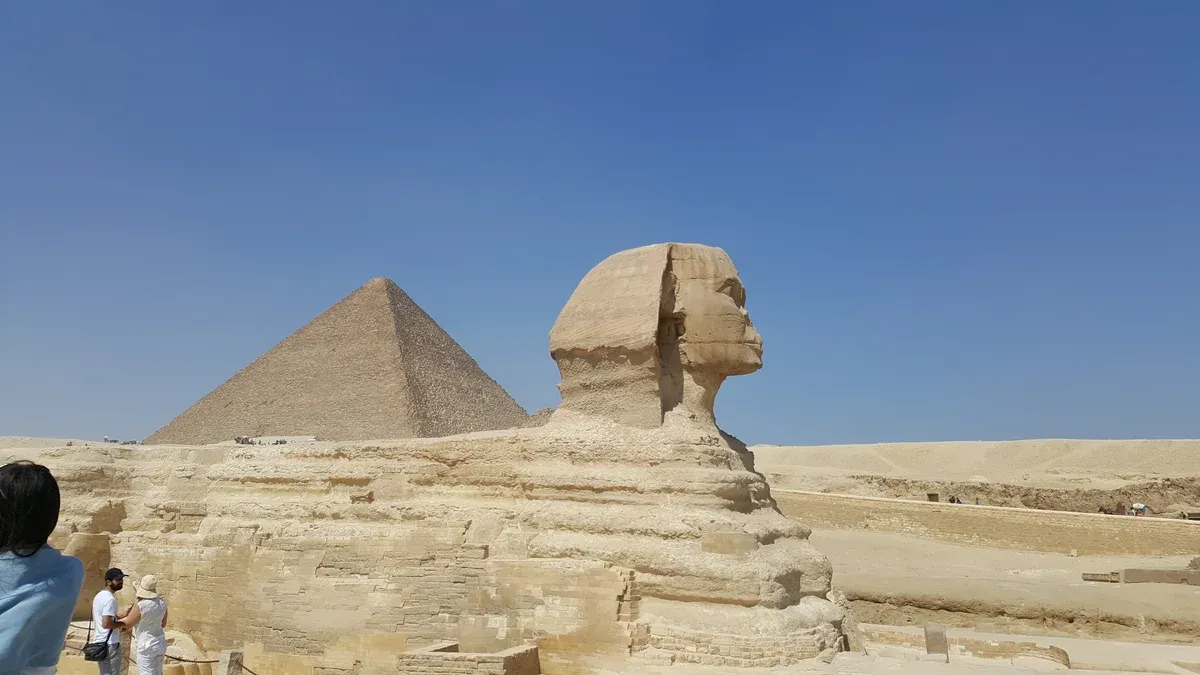
The Great Sphinx from the front. Photo: Ovedc, CC BY-SA 4.0, via Wikimedia Commons
Size and material
The statue measures 73 m (240 ft) from paw to tail, stands 20 m (66 ft) high and is 19 m (62 ft) wide at the rear haunches. It was carved directly out of the limestone bedrock of the Mokattam Formation during the 4th Dynasty (c. 2613 to 2494 BC). Workers using stone hammers and copper chisels likely needed about three years and around 100 workers to shape it. Pigment residue suggests the whole statue was once painted.
It is sometimes described as an androsphinx, a sphinx with a human head and a lion's body. The core blocks for Khafre's valley temple were quarried from the same site, so the statue and the temple grew out of one excavation.
| Feature | Figure |
|---|---|
| Length, paw to tail | 73 m (240 ft) |
| Height | 20 m (66 ft) |
| Width at rear haunches | 19 m (62 ft) |
| Estimated workforce | About 100 workers |
| Estimated carving time | About 3 years |
Where it stands
The Sphinx lies on the eastern edge of the Giza Plateau, close to the Pyramid of Khafre and next to Khafre's valley temple. It faces east across the Nile valley. Historically it was partially buried in sand, and an illustration from Napoleon's expedition shows it that way. It is part of the Memphite Necropolis, inscribed on the UNESCO World Heritage List in 1979.
See the full pyramid of giza tour planning guide for how the plateau fits together.
Sources: Ministry of Tourism and Antiquities, UNESCO World Heritage Centre.
Who built the Sphinx and why?
Archaeological evidence points to the reign of Khafre in the 4th dynasty, with the statue likely carrying his face as a guardian of the pyramid complex.
Most scholars attribute the Sphinx to Khafre, the builder of the second Giza pyramid. A few argue for Khufu or his son Djedefre.
The evidence for Khafre
The facial features of the Sphinx match the statues of Khafre (c. 2558 to 2532 BC). The Sphinx Temple lies next to his valley temple, and analysis shows the valley temple was finished first. Britannica dates the statue to the 4th dynasty and the reign of Khafre (c. 2472 to c. 2448 bce), with alternatives being Redjedef or Khufu (c. 2590 to 2566 BC).
The purpose was religious and protective. In the New Kingdom the statue was revered as the solar deity Hor-em-akhet, Horus of the Horizon. Amenhotep II later built a temple dedicated to Horemakhet beside it.
Source: Ministry of Tourism and Antiquities.
What piece is missing off the Great Sphinx?
The nose is the missing piece, broken off by a deliberate act with rods or chisels, not by cannonfire.
The face has lost its nose and part of its beard, and the damage happened long before modern times.
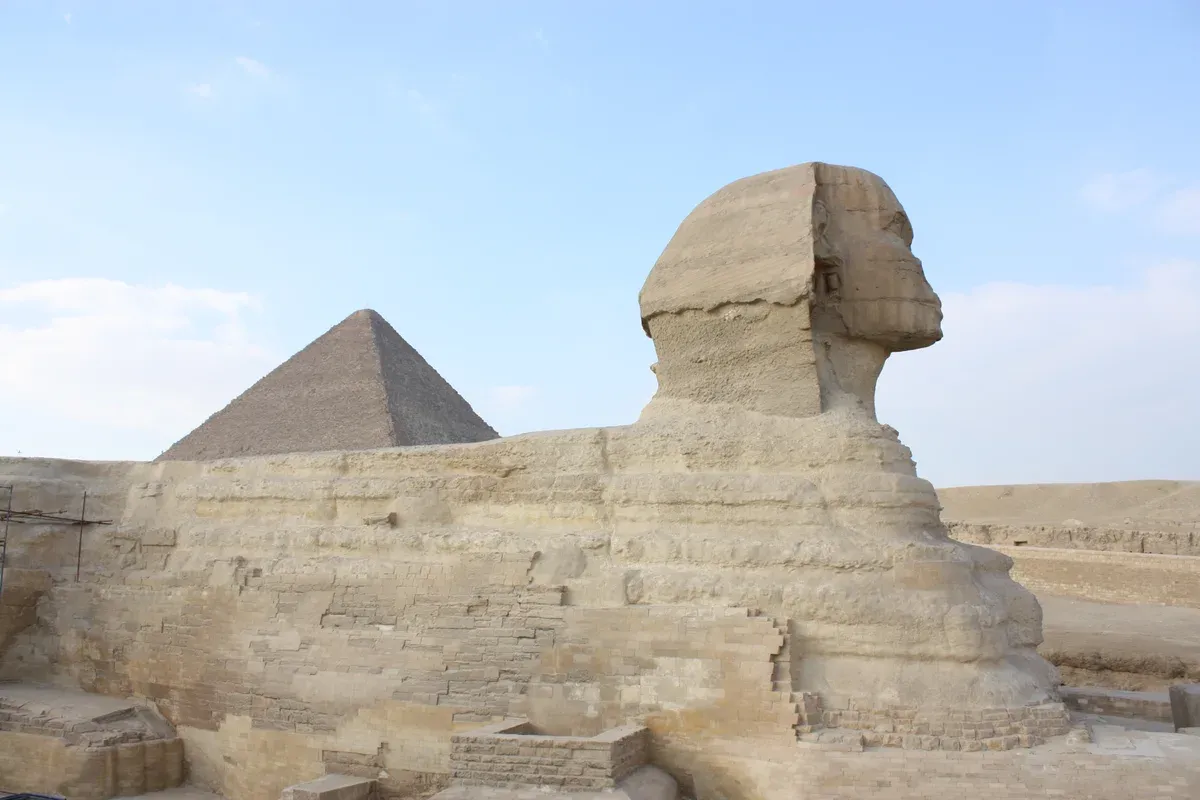
The Sphinx in profile. Photo: Wknight94, CC BY-SA 3.0, via Wikimedia Commons
How the nose was lost
The nose was destroyed by a deliberate act with rods or chisels. One theory blames Muhammad Sa'im al-Dahr, a Sufi Muslim, in the 14th century, but illustrations made before Napoleon's expedition already show a noseless sphinx. The popular story that Napoleon's soldiers shot the nose off with cannonfire is a myth.
An illustration from his expedition shows the statue already noseless and partially buried in sand.
Did Napoleon shoot the nose off the Sphinx?
No, pre-Napoleon illustrations already show the Sphinx without its nose.
This is the most repeated myth about the monument, and the evidence clears Napoleon completely.
What the evidence shows
Drawings from before the French expedition depict a noseless Sphinx, so the loss happened centuries earlier. The documented explanation is deliberate destruction with rods or chisels, with a 14th-century attribution to Muhammad Sa'im al-Dahr as one theory. An illustration from Napoleon's expedition records the Sphinx partially buried in sand, with the face already damaged.
Why can't you go inside the Sphinx?
The passages inside the body are small archaeological features, not a visitor route, and the statue is closed to protect it.
There are openings in the Sphinx, but none was ever a proper interior, and none is open to travellers.
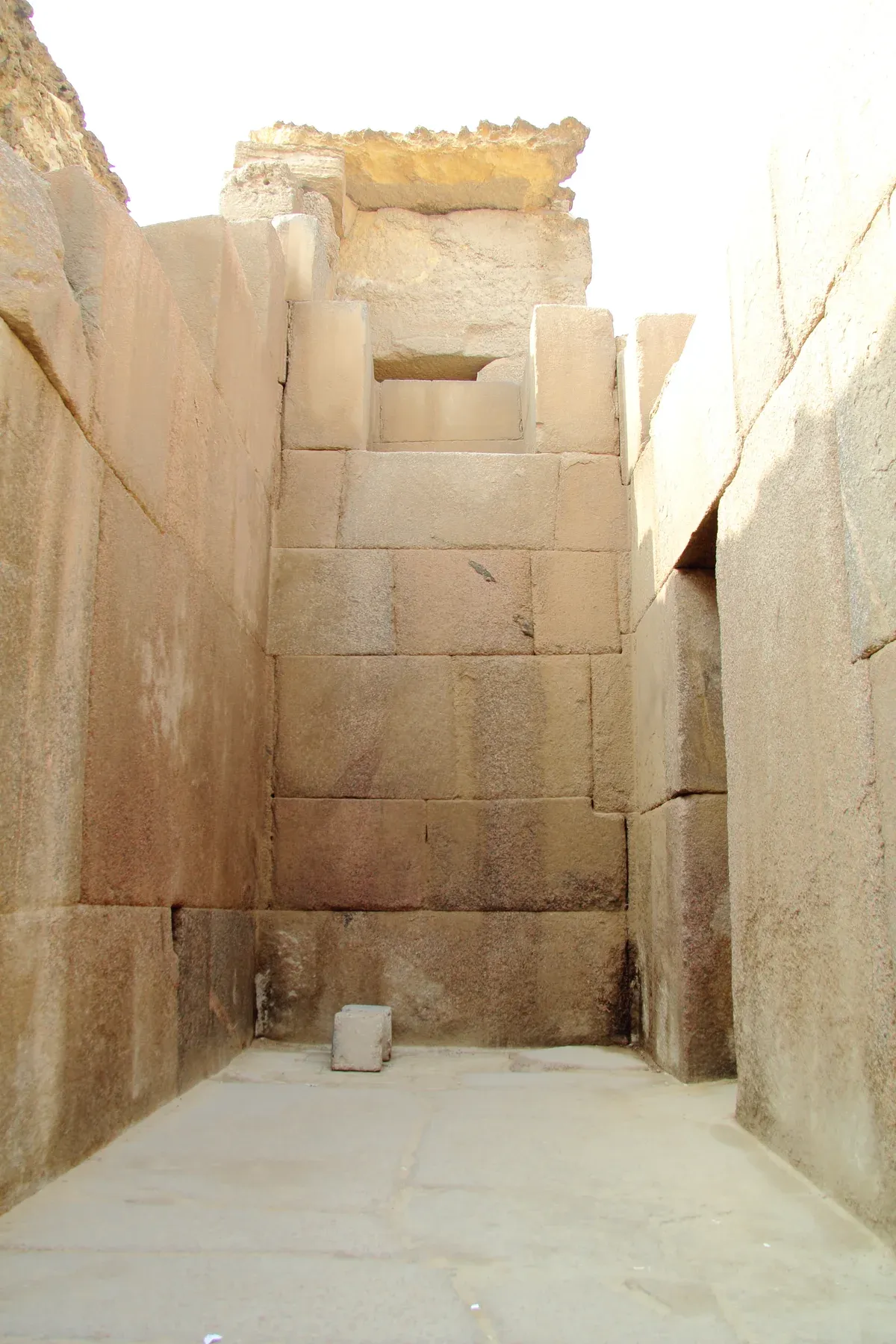
A passage in Khafre's Valley Temple. Photo: Djehouty, CC BY-SA 4.0, via Wikimedia Commons
What is inside the body
Surveys record a hole in the head, Perring's Hole, a rump passage, a niche in the northern flank and a keyhole shaft. These are inspection passages and shafts recorded by surveyors and restorers, not rooms. There is no chamber large enough to walk through and no public access.
What is buried under the Sphinx
Claims about hidden chambers under the statue belong to pseudohistory, and no documented underground rooms have been opened to the public. What you can visit around it is real: the Dream Stela that Thutmose IV erected between its front paws, the Sphinx Temple and Khafre's valley temple next door.
Source: Ministry of Tourism and Antiquities.
What is so special about the Great Sphinx of Giza?
It is the oldest known monumental sculpture in Egypt, carved from a single piece of bedrock and once fully painted.
No other Egyptian statue combines this age, this scale and this carving method in one block of stone.
Three reasons it stands apart
First, its age. It was carved directly out of the bedrock during the 4th Dynasty, which makes it the oldest colossal statue in Egypt. Second, its method. It was cut from one piece of limestone, not assembled from blocks. Third, its appearance. Pigment residue suggests the entire statue was once painted, so the face and body you see today once carried colour.
Restoration efforts may have begun as early as the reign of Thutmose IV (c. 1400 to c. 1390 bce), which is why the Dream Stela between the paws records his dream and his repairs.
Source: Ministry of Tourism and Antiquities.
The Great Sphinx of Giza faces which direction?
It faces due east, toward the rising sun, from its spot on the west bank of the Nile.
The eastward face is the reason sunrise is the best photo hour at this monument.
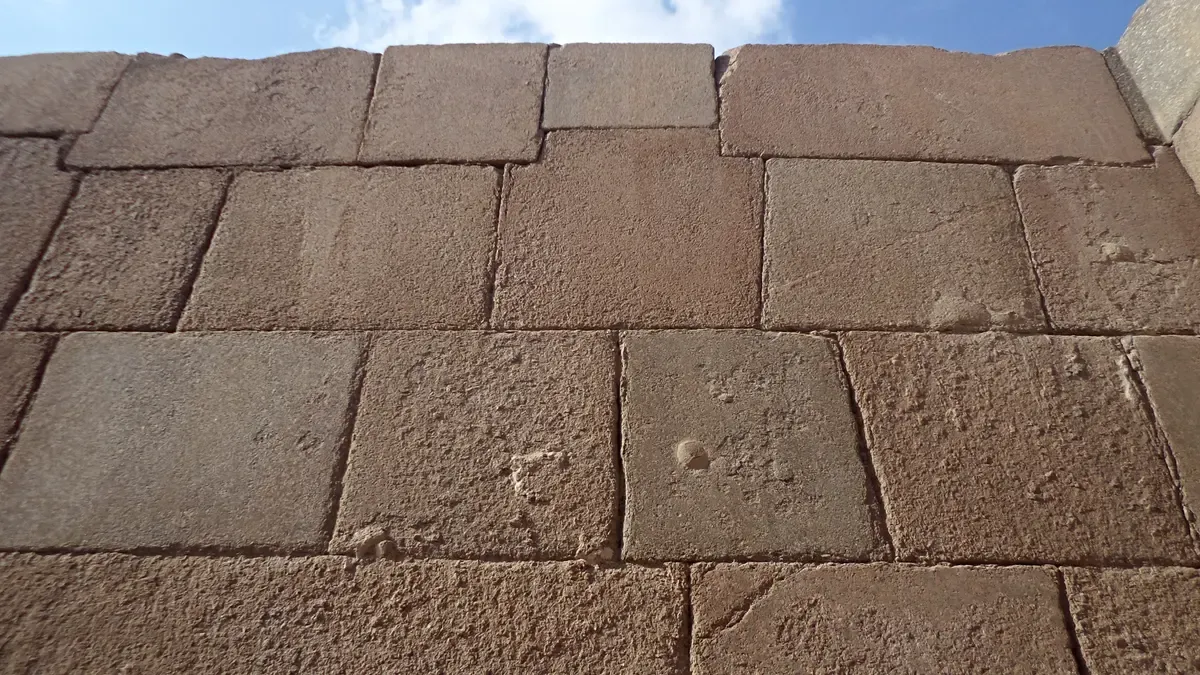
Giant stone blocks in Khafre's Valley Temple. Photo: A. Parrot, CC BY-SA 4.0, via Wikimedia Commons
Why it matters for your visit
The Sphinx faces east on the Giza Plateau on the west bank of the Nile. At sunrise the sun rises in front of the face, which gives the classic backlit silhouette and soft light for photographs. A Giza Pyramids Sunrise Tour with a Camel Ride and Breakfast puts you at the plateau before the crowds and before the harsh midday light.
Later in the day the face falls into shadow and photos flatten.
Is there a second Sphinx at Giza?
The Sphinx at Giza is the only one of its kind on the plateau and the only colossal sphinx attributed to the 4th dynasty there.
Travellers sometimes ask this after seeing sphinx statues elsewhere in Egypt.
Sphinxes elsewhere in Egypt
Smaller sphinx statues and avenues of sphinxes exist at other Egyptian sites, but none of them is the Great Sphinx, and no second colossal sphinx stands at Giza. The statue here is unique in size, age and carving method, which is why it anchors the Giza visit.
Source: Ministry of Tourism and Antiquities.
Tours That Fit
These tours include the Sphinx beside the pyramids.
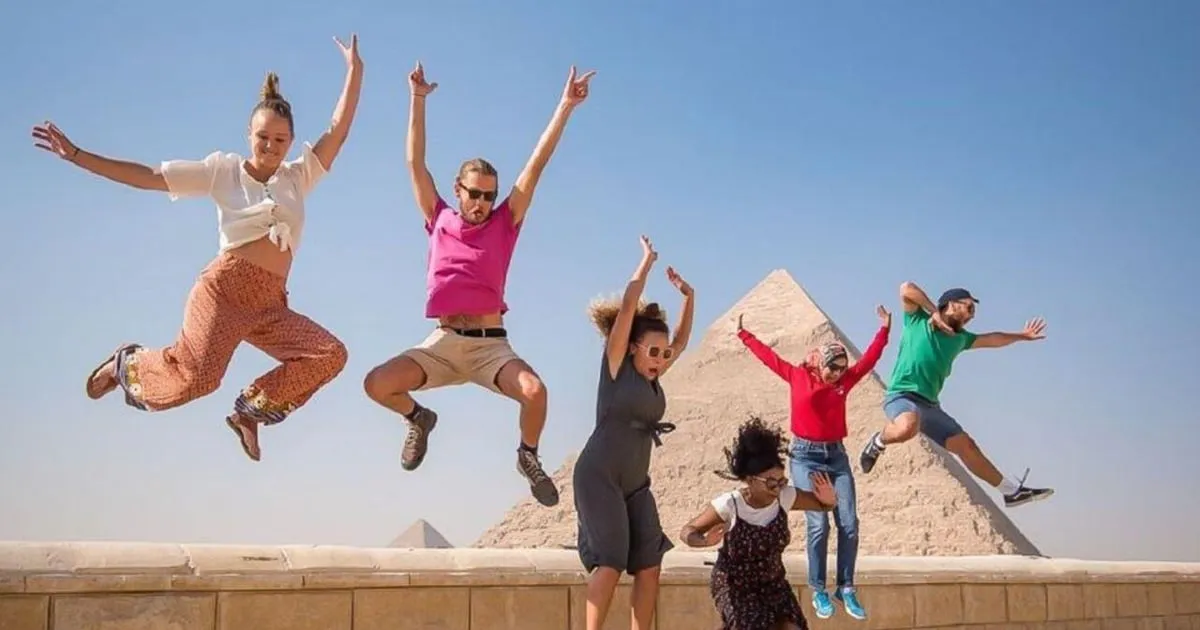
Giza Pyramids and Sphinx Private Tour with a Camel Ride
The classic half day, private: your own car, an Egyptologist, the plateau ticket already paid and a camel ride at the panorama point. Two shop stops are part of the day.
- Category
- Half day at Giza
- Cancellation
- Free cancellation 24h
- Operator
- Snefro Travel
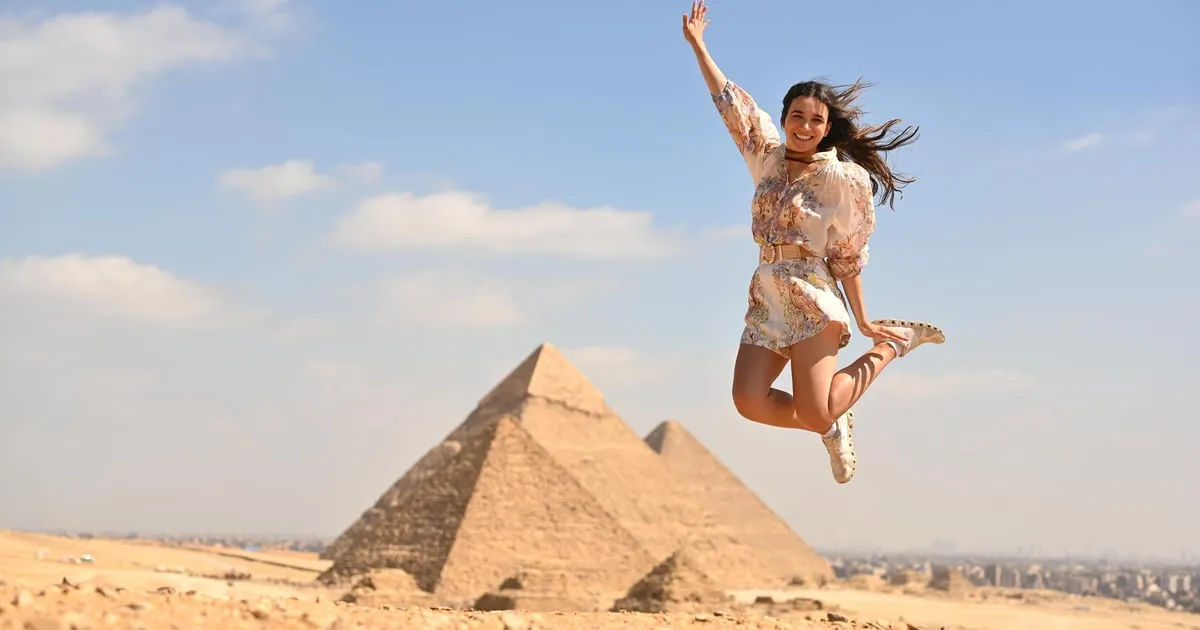
Giza Pyramids, Sphinx and Grand Egyptian Museum Tour with Lunch
Pyramids in the morning, two guided hours in the Grand Egyptian Museum after, both entry tickets and lunch in the price. Twelve people at most.
- Category
- Full day: Giza plus
- Cancellation
- Free cancellation 24h
- Operator
- OceanAir Travel
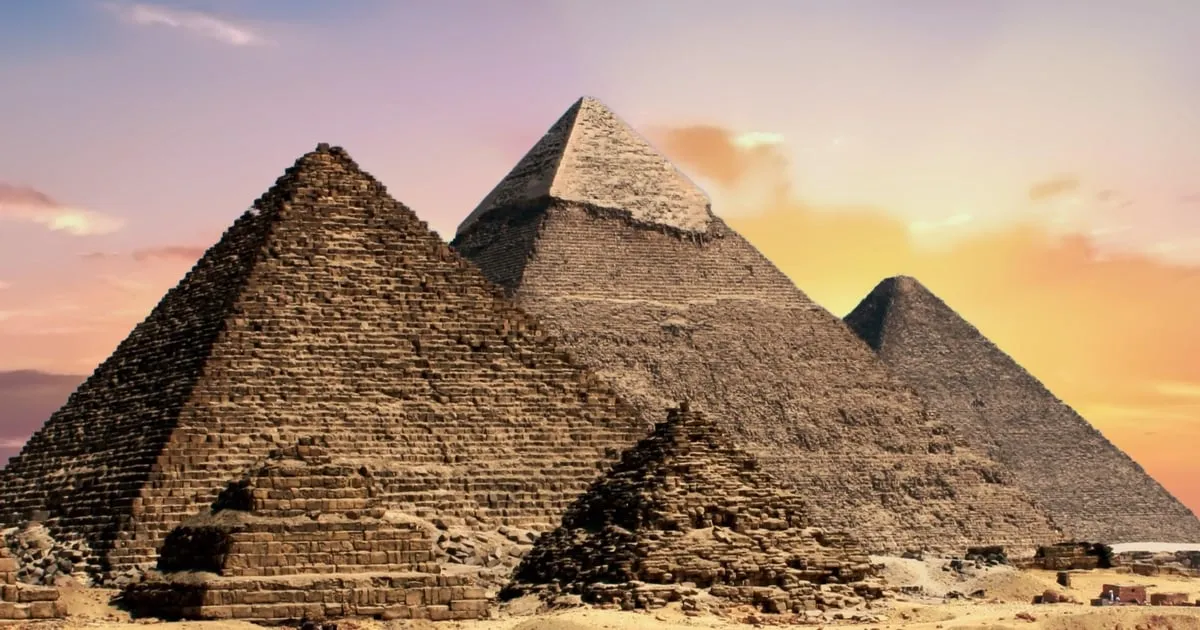
Giza Pyramids Sunrise Tour with a Camel Ride and Breakfast
A 5 am pickup and an hour on a camel or horse while the sun comes up behind the pyramids, then breakfast and two guided hours on the plateau before the heat.
- Category
- Half day at Giza
- Cancellation
- Free cancellation 24h
- Operator
- Egypt Excursions Online
How do you see the Sphinx beside the pyramids on a tour?
It stands on the eastern edge of the plateau, so every Giza pyramid route reaches it, and the best angles come from the valley temple area at sunrise.
The Sphinx is not a separate site with its own ticket. A Giza Plateau entry covers the plateau, and the statue sits on the walking line between the pyramids and Khafre's valley temple.
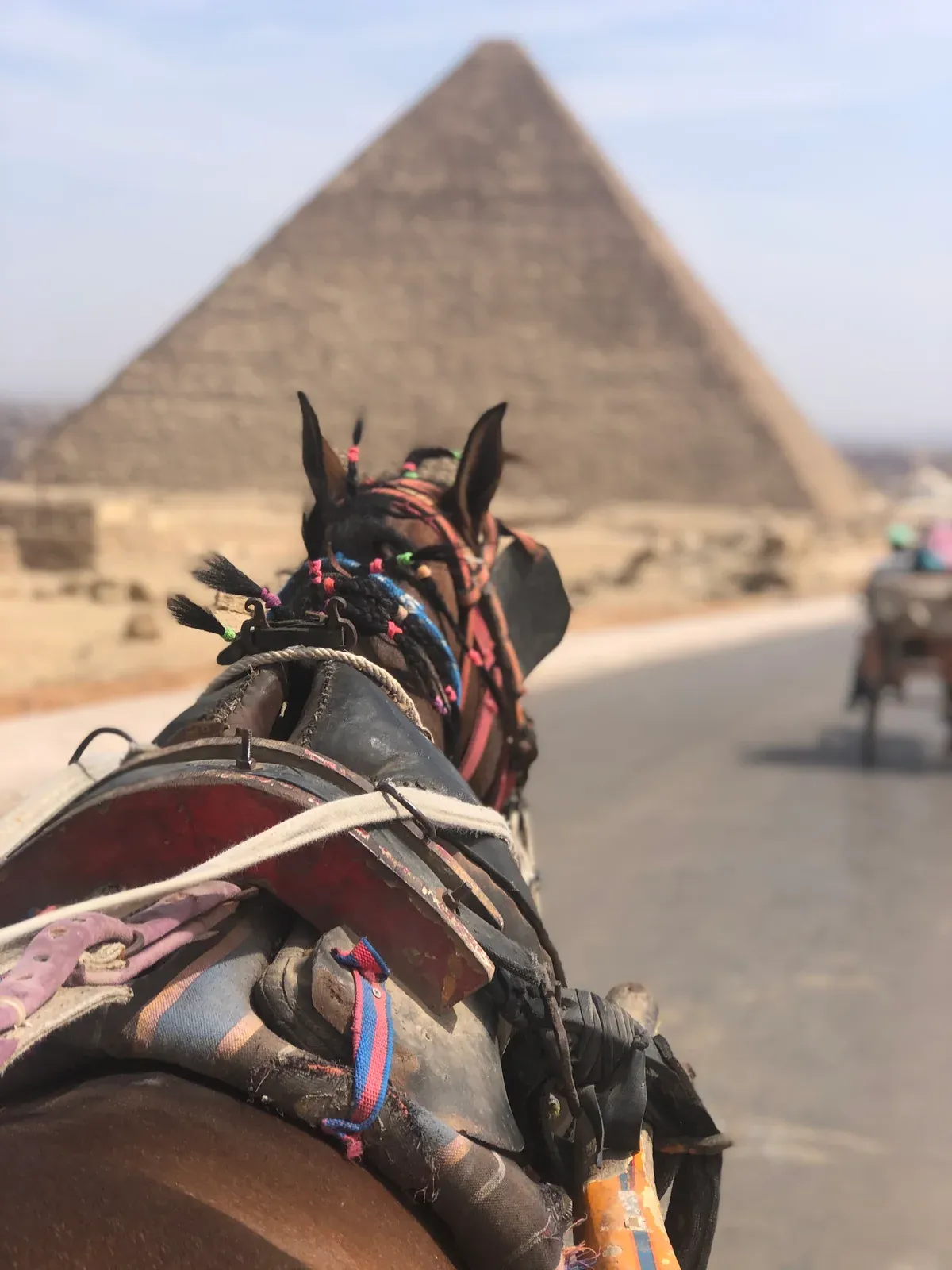
A horse carriage ride at the Great Pyramid. Photo: Menna Hosny, CC BY-SA 4.0, via Wikimedia Commons
Tickets and hours
The Giza Plateau entry fee for foreign adults is EGP 700 (about $12.64), with foreign students paying EGP 350 (about $6.32), according to the Ministry of Tourism and Antiquities booking site. Children under 6 enter free and mobile phone photography costs nothing. The plateau opens every day at 07:00 with last entry at 16:00 in both summer and winter. During Ramadan it opens at 08:00 with last entry at 15:30. The site asks visitors to arrive at least one hour before closing and to keep the ticket for the whole visit.
Entering the pyramids costs extra: the Great Pyramid of Khufu add-on is EGP 1,500 (about $27.09) for a foreign adult and Khafre is EGP 280 (about $5.06), per the official booking page. There is no separate ticket for the Sphinx itself.
The best viewing order
Start at the pyramids on the high ground, then walk down to the eastern edge where the Sphinx waits beside Khafre's valley temple. The east-facing statue is best photographed in the morning. The Dream Stela between the paws and the Sphinx Temple are on the same walk. A guided Giza Pyramids and Sphinx Private Tour with a Camel Ride handles the route and the timing, starting at $54 per person.
If you want the Sphinx plus the artefacts removed from Giza, the Giza Pyramids, Sphinx and Grand Egyptian Museum Tour with Lunch at $97 per person covers both in one day, and the museum's galleries run 09:00 to 18:00 on most days.
Choose a tour by what else you need
For a short Cairo stop, a Cairo Layover Tour From the Airport: Pyramids, Sphinx and Museum fits the gap between flights. From the Red Sea, the Hurghada to Cairo Day Trip by Road: Giza Pyramids, Sphinx and Museum runs 15 to 20 hours at $74 per person. For desert views of the plateau, the Giza Pyramids Quad Bike Desert Safari with an Optional Camel Ride gives you an hour on the quad from $40 per person.
Travellers who want to go inside the Great Pyramid can pick the Private Giza Pyramids Tour with Entry Inside the Great Pyramid.
Photo and camera rules
Phone photography at the plateau is free. Drones are heavily restricted in Egypt and need a permit from the Egyptian Ministry of Defense, so leave the drone at home. Note that at the Grand Egyptian Museum, tripods, monopods, selfie sticks, external lighting and flash are prohibited.
Sources: Egyptian Monuments Authority, Egyptian Monuments Authority, Grand Egyptian Museum, Egyptian Monuments Authority.
What else pairs well with the Sphinx in one day?
Saqqara, Dahshur and the Grand Egyptian Museum all sit within a day of Giza and share the same pyramid story.
If one plateau morning is not enough, three add-ons extend the day without long drives.
Saqqara and Dahshur
The Giza Pyramids, Sphinx, Saqqara and Memphis Day Tour from Cairo adds the step pyramids to the south. Saqqara Monuments entry is EGP 600 (about $10.84) for a foreign adult and Dahshur is EGP 200 (about $3.61), according to the Ministry booking site. Saqqara opens at 08:00 with last entry at 16:00, and Dahshur keeps the same hours.
Grand Egyptian Museum
The Grand Egyptian Museum sits near the plateau. Its complex opens 08:30 to 19:00 on Sunday, Monday, Tuesday, Thursday and Friday, and 08:30 to 22:00 on Wednesday and Saturday. Galleries close an hour earlier, with last entry one hour before they close.
Bags larger than 40 x 40 cm go to the cloakroom. A GEM ticket covers the Tutankhamun Galleries, Main Galleries, Grand Hall, Grand Stairs, Khufu's Boats Museum, the commercial area and the gardens.
Sources: Egyptian Monuments Authority, Egyptian Monuments Authority, Grand Egyptian Museum.
Great Sphinx of Giza FAQ
What piece is missing off the Great Sphinx?
The nose is missing, destroyed by a deliberate act with rods or chisels, and part of the beard is also gone. The damage predates Napoleon, since pre-Napoleon illustrations already show a noseless sphinx.
Who built the Sphinx and why?
Evidence points to Khafre, builder of the second Giza pyramid, in the 4th dynasty. The face matches his statues, and the statue served as a guardian of his pyramid complex, later revered as the solar deity Hor-em-akhet.
What is so special about the Great Sphinx of Giza?
It is the oldest known monumental sculpture in Egypt, 73 m long and carved from a single piece of limestone bedrock, and pigment residue shows it was once fully painted.
Why can't you go inside the Sphinx?
The openings in the body are small survey and restoration passages, not rooms, and there is no public route inside. Recorded features include Perring's Hole, a rump passage and a keyhole shaft.
The Great Sphinx of Giza faces which direction?
It faces due east from the west bank of the Nile, which is why morning light gives the best photographs of the face.
Did Napoleon shoot the nose off the Sphinx?
No. Illustrations made before Napoleon's expedition already show the Sphinx without its nose, and the documented cause is deliberate destruction with rods or chisels.
What is buried under the Sphinx?
No chambers under the statue have been opened, only the shafts and passages recorded in its body. Claims about hidden halls belong to pseudohistory.
How much does it cost to see the Sphinx?
There is no separate Sphinx ticket. Giza Plateau entry is EGP 700 (about $12.64) for a foreign adult and EGP 350 (about $6.32) for a foreign student, according to the Ministry of Tourism and Antiquities. Guided options like the Giza Pyramids and Sphinx Private Tour with a Camel Ride start at $54 per person.
More Guides
- Cairo to Giza: How Far the Pyramids Are and How to Get There
The pyramids sit 13 to 15 km from central Cairo in 2027. The Line 2 metro takes 11 minutes. Compare every way across and see the prices.
- Giza Pyramids Facts: How Old, How Tall and Who Built Them
The pyramids were built between 2580 and 2500 BCE, over 4,500 years old. 2027 facts on age, height and builders. Compare tours.
- Giza Weather by Month and the Best Time to Visit the Pyramids
Giza weather in 2027: highs of 18.9°C in January and 35.0°C in July. Go at the 07:00 opening and compare tours.