 Pyramid of Giza Tours
Home › Guides › What to Wear in Egypt to Visit the Pyramids of Giza
What to Wear in Egypt to Visit the Pyramids of Giza
What to wear in Egypt for a pyramid of Giza day comes down to loose clothes that cover your shoulders and knees, light colours, and thick-soled shoes for rocky desert ground. The plateau opens at 07:00 with last entry at 16:00, so plan for sun and heat in the morning and a cool end to the day.
Quick answer The short answer on what to wear at the pyramids
Wear loose, light-coloured clothing that covers your shoulders, chest and knees, plus a hat, sunglasses and thick-soled hiking sandals. The Giza Plateau is open desert with almost no shade, so dress for sun, rock and walking, not for style alone.
Key takeaways
- Book a pyramid of giza tour and let the guide pace your day around the heat
- Pick the Giza Pyramids and Sphinx Private Tour with a Camel Ride for a 4 to 8 hour option that suits your outfit
- Start early with the Giza Pyramids Sunrise Tour with a Camel Ride and Breakfast to beat the midday sun
- Ride instead of walk on the Giza Pyramids Quad Bike Desert Safari with an Optional Camel Ride and cover the same ground in less sun
What to wear when visiting the pyramids in Egypt?
Wear loose, light-coloured clothes that cover your shoulders and knees, closed or thick-soled shoes for the rocky ground, and a hat with sunglasses for sun protection.
Giza is not a museum floor. You walk on gravel, bedrock and soft sand, often for hours, with almost no shade between the Great Pyramid and the Sphinx. Your outfit needs to handle heat, dust and uneven ground at the same time.
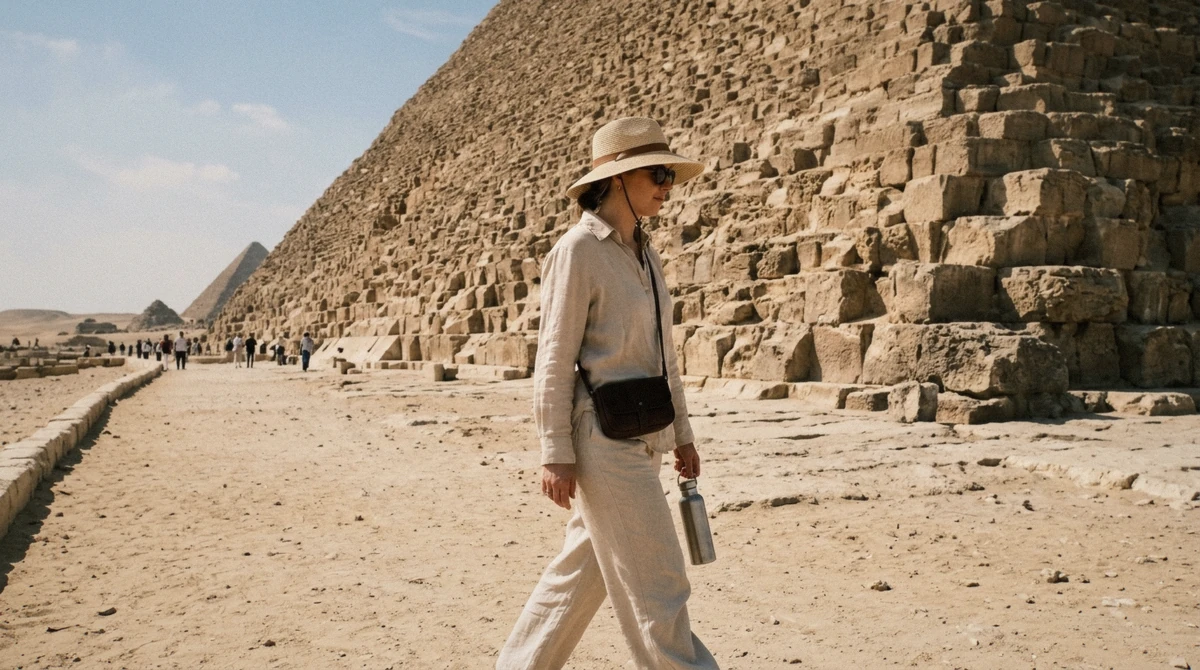
Loose long sleeves, a wide hat and a small bag on the plateau.
The plateau itself
The site sits about 13 km southwest of central Cairo, and once you pass the entrance you are on open desert. The Giza Plateau opens every day at 07:00, with last entry at 16:00 in both summer and winter schedules, and the official site asks visitors to arrive at least one hour before closing and keep the ticket for the whole visit. Entry for foreign adults is EGP 700 (about $12.64), per the official Ministry of Tourism and Antiquities details page, and mobile phone photography is free.
Most of that day is spent standing or walking in direct sun. Bring a wide-brimmed hat, sunglasses and a light long-sleeved shirt you can pull over your shoulders. A scarf doubles as sun cover and as a dust shield when the wind picks up on the plateau.
If you want to go inside the pyramids, note that entry is a separate add-on on the official booking page: the Great Pyramid of Khufu costs a foreign adult EGP 1,500 (about $27.09), Khafre EGP 280 (about $5.06), and the tomb of Meresankh III, listed as Mars Ankh Tomb, EGP 200 (about $3.61). The passages inside are low, steep and drafty, so wear shoes with grip and clothes you can crouch in. A backpack is a nuisance in the tunnels, so pack light for those add-ons.
| Item | Why it matters at Giza |
|---|---|
| Thick-soled hiking sandals or trainers | The ground is rock and gravel, not pavement |
| Wide-brimmed hat and sunglasses | Almost no shade between monuments |
| Light long-sleeved shirt | Sun cover without heavy fabric |
| Loose trousers or a long skirt | Knees covered and cooler than shorts |
| Small bag | Easier in the narrow pyramid passages |
Timing your outfit to the day
Entry starts at 07:00, which is the coolest and quietest stretch of the plateau. Morning visits need the least sun gear. Afternoon visits, especially anything after noon, need the full kit: hat, sunscreen, light layers and plenty of water in your bag.
The Pyramids Sound and Light Show runs at Abu Alhol Square, Nazlet El-Semman, Giza, and sits outdoors after dark. Temperatures at Giza drop once the sun goes down, so add a light jacket or a long-sleeved layer to your bag if your day ends with the show.
Sources: Egyptian Monuments Authority, Egyptian Monuments Authority.
What should female tourists wear in Egypt?
Women should wear loose clothing that covers the shoulders, chest and knees, and a hijab is not needed except when entering certain mosques.
Egypt is a conservative country and the Giza plateau sits in full view of the surrounding neighbourhoods. The rule of thumb is simple: keep shoulders, chest and knees covered with loose fabric, and you will be comfortable and respected everywhere you go that day.
Modesty rules that actually apply
Cover shoulders, chest and knees, and a hijab is not needed except when entering certain mosques, as the travel guides for women in Egypt consistently advise. On a pyramid day this means a long skirt, a midi or maxi dress, loose trousers, or lightweight pants with a shirt that covers your shoulders.
Tight-fitting clothes should be avoided even when they are long. Long skirts, maxi dresses and loose trousers keep you cool while staying modest, and the same guides warn against anything revealing or clingy. Fit matters more than length in the heat, because loose fabric lets air move and tight fabric holds heat against your skin.
No mosque visit is part of the standard pyramid plateau day, so you can leave the headscarf in your bag. If your Giza Pyramids, Sphinx and Grand Egyptian Museum Tour with Lunch adds other stops in the city, keep a scarf handy anyway. It weighs nothing and covers both sun and shoulders.
A women's packing list for the pyramid day
A practical packing list for women in Egypt includes two midi or maxi dresses, two or three scarves, two long-sleeved shirts and three short-sleeve items, per the packing guides from women who travel there. For a single Giza day you need less: one outfit that covers knees and shoulders, one spare layer, and sun gear.
Choose loose linen shirts, loose trousers and long pants over anything fitted. Cotton and linen dry fast and breathe, which matters when you are walking between the pyramids in the late morning.
A sample day outfit: a loose linen shirt over a cotton vest, wide lightweight trousers, thick-soled hiking sandals, a wide-brimmed hat, sunglasses, and a scarf folded in your bag. That covers every rule and every terrain you will meet between the ticket gate and the panorama point.
Can you wear shorts as a woman in Egypt?
You will not be stopped from wearing shorts at the Giza pyramids, but loose capris or lightweight pants are the better choice for both modesty and sun.
There is no dress-code inspection at the plateau gate and no rule printed on your ticket about clothing. The practical answer is about heat, sun and local norms rather than enforcement.
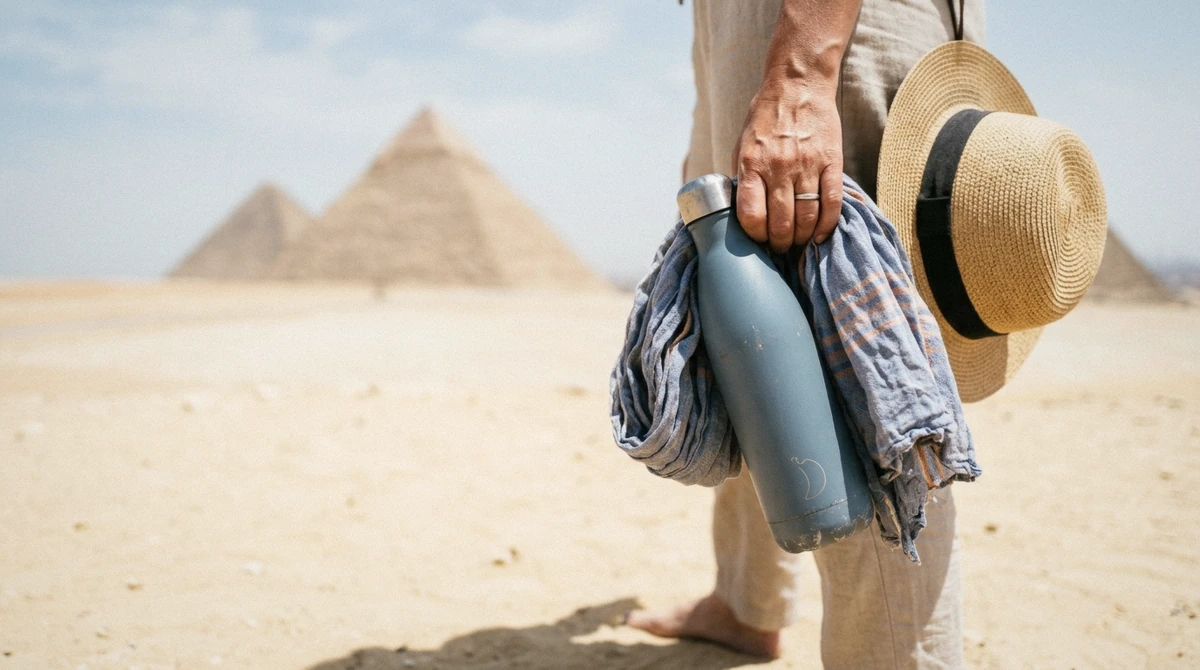
Water, a scarf and a hat for the midday sun.
Shorts in practice
Some travellers do wear shorts on the plateau, and the packing guides suggest shorts, capris or lightweight pants in light colours as workable options. You will not be turned away at the entrance for wearing them.
The stronger argument is the sun. Hours of direct light on bare knees and thighs at Giza burns fast, and loose long trousers keep you cooler than bare skin. If you want shorts, bring a light scarf or a long shirt to drape over your legs during the midday stretch, and save the shorts for the hotel or the evening.
Camel and quad bike legs prefer fabric too. On the Giza Pyramids and Sphinx Private Tour with a Camel Ride or the Giza Pyramids Quad Bike Desert Safari with an Optional Camel Ride, long trousers protect against saddle friction, engine heat and flying sand.
What not to wear in Egypt as a tourist?
Avoid revealing or tight-fitting clothing, dark colours like black and navy, and thin-soled shoes or sandals that cannot handle rocky sand.
The list of what to skip is short and it makes the day easier. Everything on it fails for a concrete reason at Giza: heat, sun, rock or local custom.
Skip these on the plateau
Avoid revealing or tight-fitting clothing and choose loose linen shirts, loose trousers and long pants instead, per the packing guides written for Egypt travel. Revealing means deep necklines, bare midriffs and anything strapless.
Skip black, navy and other dark colours. Dark fabric absorbs heat, and travellers who have done the plateau in summer report light colours make a visible difference by early afternoon.
Skip thin flip-flops and new unbroken shoes. The ground between the Sphinx and the panorama point is broken rock and drift sand, and a flat sole gives you no grip. Skip bulky bags as well: the Private Giza Pyramids Tour with Entry Inside the Great Pyramid takes you into narrow passages where a backpack slows everyone behind you.
One more gear note rather than clothing: drones are heavily restricted in Egypt and need a permit from the Egyptian Ministry of Defense, so leave the drone home and rely on your phone camera, which is free to use at the plateau.
Source: Egyptian Monuments Authority.
Tours That Fit
These pyramid tours all start early or move fast, which is exactly what your clothing choice is built around.
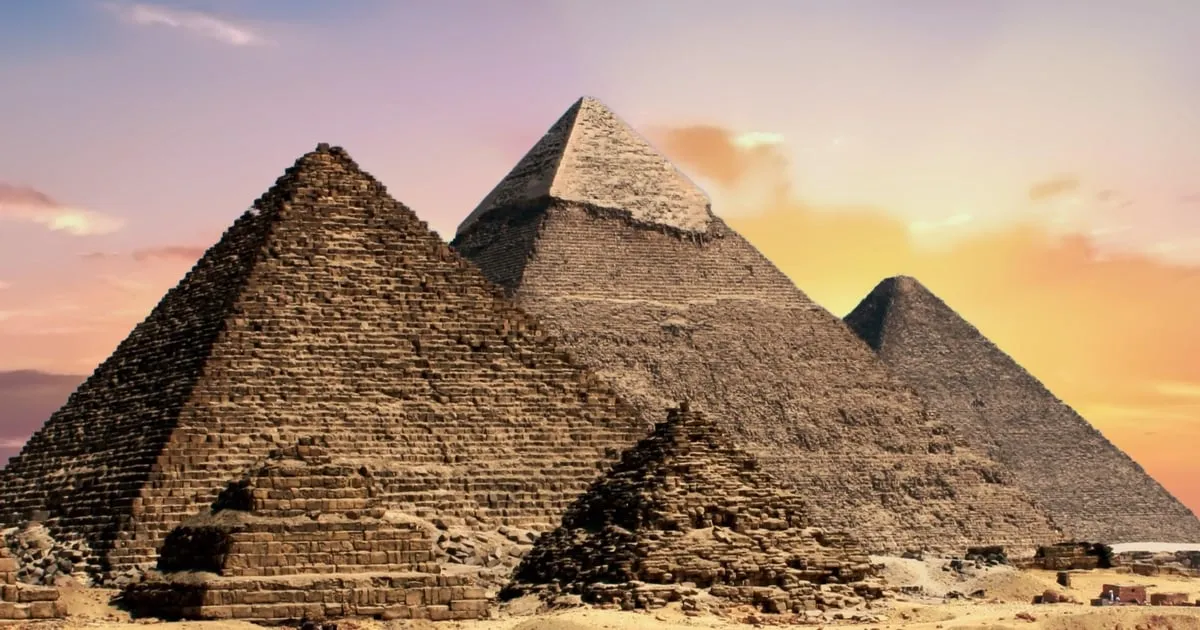
Giza Pyramids Sunrise Tour with a Camel Ride and Breakfast
A 5 am pickup and an hour on a camel or horse while the sun comes up behind the pyramids, then breakfast and two guided hours on the plateau before the heat.
- Category
- Half day at Giza
- Cancellation
- Free cancellation 24h
- Operator
- Egypt Excursions Online
Giza Pyramids and Sphinx Private Tour with a Camel Ride
The classic half day, private: your own car, an Egyptologist, the plateau ticket already paid and a camel ride at the panorama point. Two shop stops are part of the day.
- Category
- Half day at Giza
- Cancellation
- Free cancellation 24h
- Operator
- Snefro Travel
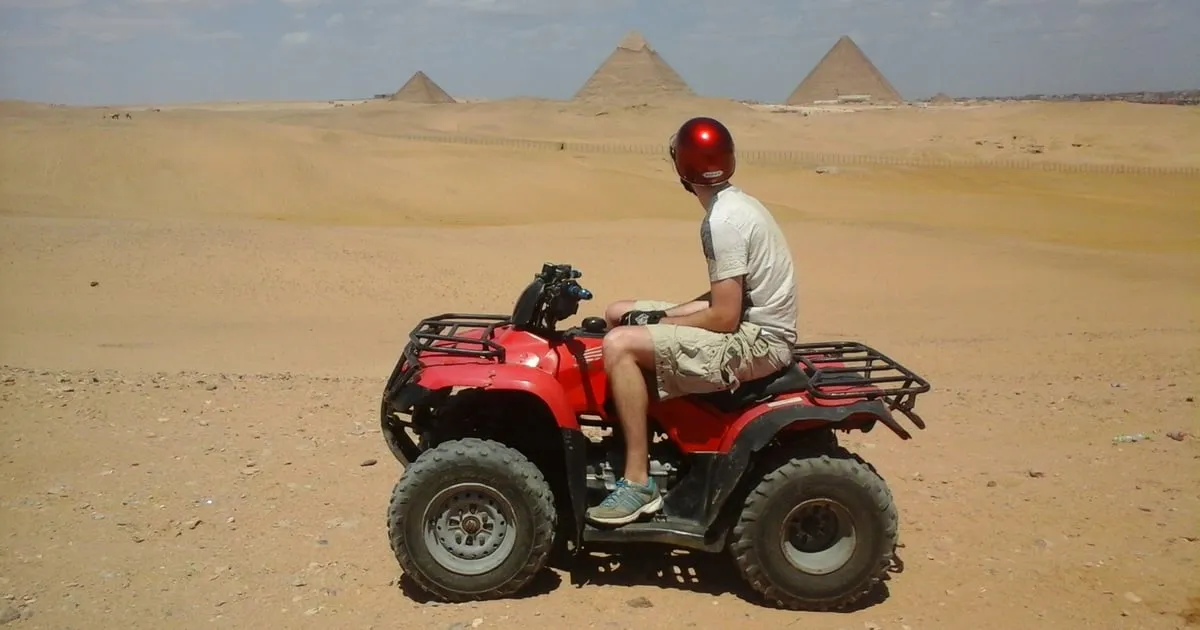
Giza Pyramids Quad Bike Desert Safari with an Optional Camel Ride
One hour on a quad in the open desert beside the plateau, with the three pyramids as the backdrop. The plateau ticket is not in the price.
- Category
- Quad bike and camel
- Cancellation
- Free cancellation 24h
- Operator
- Emo Tours Egypt
What to wear in Egypt as a man?
Men should wear lightweight long trousers or knee-length shorts, a loose shirt, a hat, and closed shoes with grip for the desert ground.
Most packing guides for Egypt are written for women, but the same desert logic applies to men. The plateau does not care about your wardrobe, the sun does.
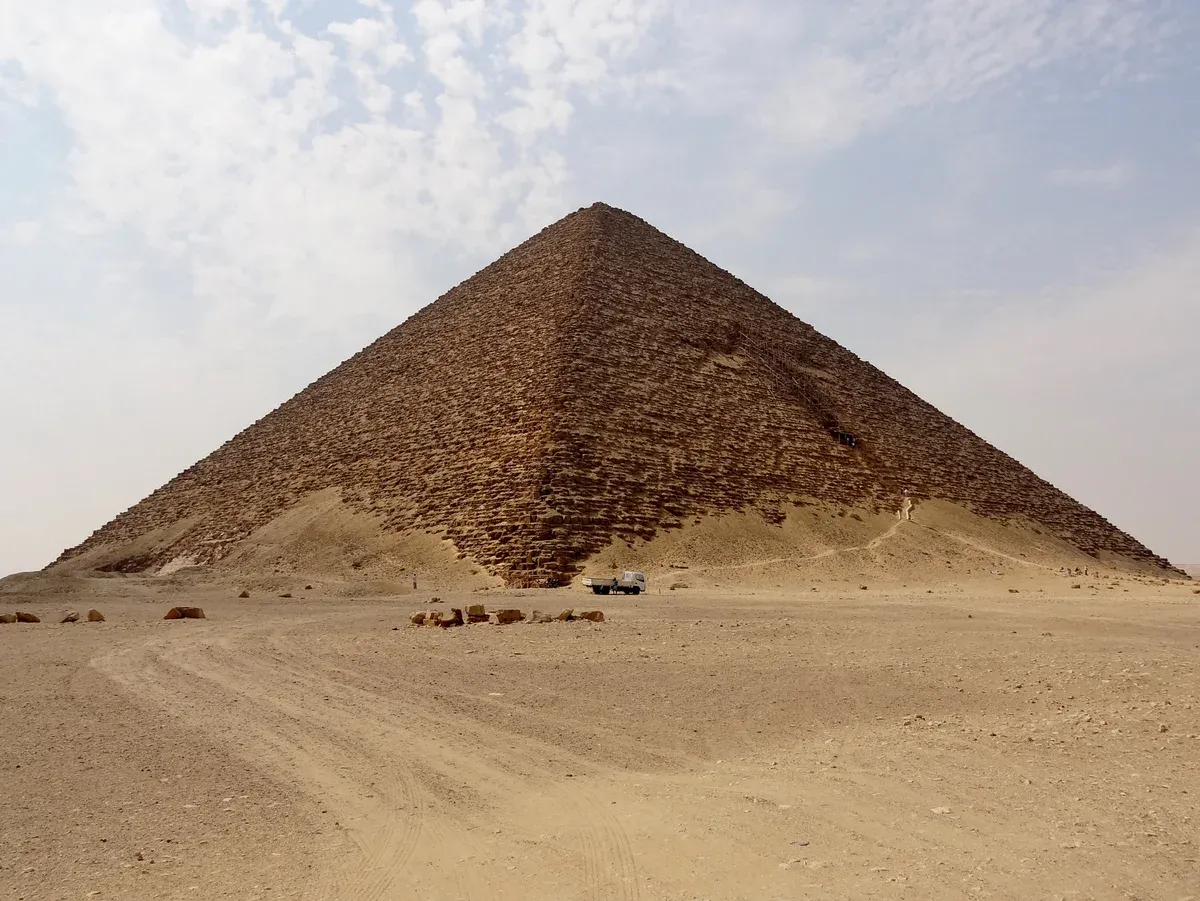
The Red Pyramid at Dahshur. Photo: Olaf Tausch, CC BY 3.0, via Wikimedia Commons
A men's kit for the pyramid day
Lightweight pants in light colours, a loose cotton or linen shirt, a cap or wide-brimmed hat, sunglasses and thick-soled shoes cover the whole day. T-shirts are fine at the pyramids, but a light long-sleeved shirt is better if you burn easily.
Shorts are acceptable on men at the plateau, as the travel writers who visited in the heat recommend shorts, capris or lightweight pants as the realistic options. Pair them with a hat and sunscreen and you are set.
For the inside-the-pyramid add-ons, the same grip rule applies. The Great Pyramid passage is steep and smooth underfoot, and the Private Giza Pyramids Tour with Entry Inside the Great Pyramid is far more fun in trainers than in dress shoes.
Source: Egyptian Monuments Authority.
What to wear in Egypt in October and November?
In October and November wear the same modest layers with an extra long-sleeved top for the cooler morning and evening hours.
Autumn is the most comfortable season for a pyramid day, and it is when most travellers plan the trip. The sun is still strong at midday, so the desert rules do not change, only the extremes soften.
Autumn layers for Giza
In October and November you can walk the plateau for longer stretches without overheating, which is why the season suits the longer itineraries such as the Giza Pyramids, Sphinx, Saqqara and Memphis Day Tour from Cairo, an 8 hour day including pickup and drop-off. Still wear a hat, sunglasses and covered shoulders at midday.
Mornings at 07:00, when the plateau opens, can feel cool enough for a light jacket. Bring one that folds into your bag, because by late morning you will not want it. If your day runs to the evening sound and light show, that same layer earns its place again.
For the very long days, the Hurghada to Cairo Day Trip by Road: Giza Pyramids, Sphinx and Museum runs 15 to 20 hours, so dress in layers you can add and remove in the vehicle and at each stop. Comfortable shoes matter even more when the day is that long.
Source: Egyptian Monuments Authority.
What to wear in Cairo as a woman?
Wear the same covered shoulders and knees as at the pyramids, with slightly smarter layers for the city and a headscarf ready for mosque visits.
Cairo and Giza share a wardrobe. The difference is that the city adds mosques, restaurants and the Grand Egyptian Museum to your day, and each has its own small rules.
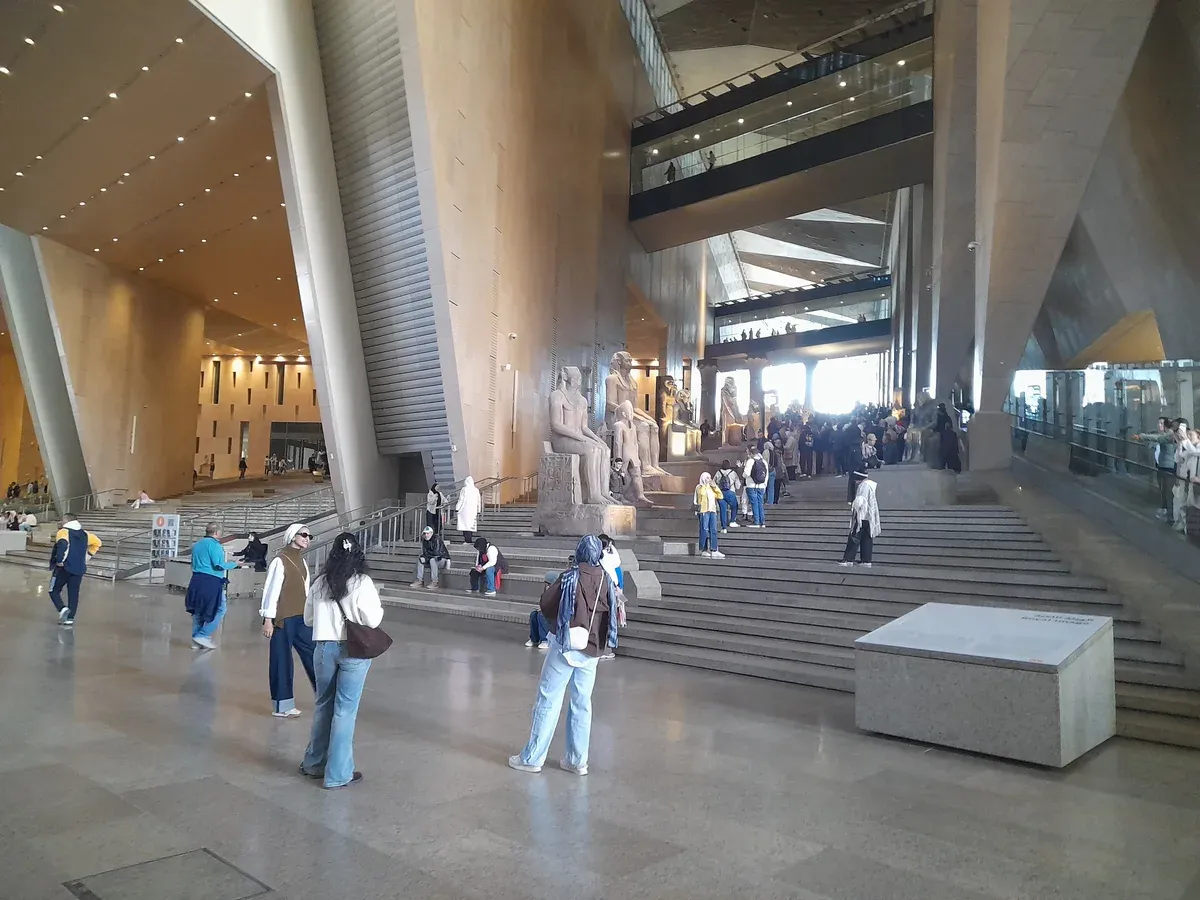
The main hall of the Grand Egyptian Museum. Photo: Amr F.Nagy, Public domain, via Wikimedia Commons
From the plateau to the museum
The modesty rule carries over unchanged: cover shoulders, chest and knees, and keep the fit loose. In the city, add a scarf in your bag because a hijab is needed only when entering certain mosques, and Cairo offers plenty of chances to step inside one.
The Grand Egyptian Museum is indoors and air-conditioned, so a light cardigan or long-sleeved shirt helps there too. The museum prohibits tripods, monopods, selfie sticks, drones, external lighting, live-streaming equipment and flash photography, though personal photography on phones and cameras is allowed, and bags larger than 40 x 40 cm must be left in the cloakroom. Plan a small day bag and a phone as your camera.
Museum hours shape your outfit timing too. Galleries run 09:00-18:00 on Sunday, Monday, Tuesday, Thursday and Friday, and 09:00-21:00 on Wednesday and Saturday, with last entry one hour before closing, per the official ticketing site. A full pyramid-plus-museum day like the Giza Pyramids, Sphinx and Grand Egyptian Museum Tour with Lunch spans both the hot plateau and the cool galleries, so layers are the answer.
Source: Grand Egyptian Museum.
What to wear in Egypt for a week?
Pack five or six loose covering outfits in light colours, two pairs of grippy shoes, a hat, sunglasses and scarves, and reuse layers across the week.
A week in Egypt usually means Giza plus Saqqara, Dahshur, the museum and maybe a Red Sea start, so your packing list has to cover desert days and cooler evenings without a suitcase full of duplicates.
A week-long packing list
Base the week on the same items that work for the pyramid day: two midi or maxi dresses or their male equivalent in loose trousers, two or three scarves, two long-sleeved shirts and three short-sleeve items. Everything mixes with everything, and light colours carry you through every afternoon.
Add a second pair of shoes so one can dry if it gets sandy, a wide-brimmed hat, sunglasses and a foldable jacket for evenings and air-conditioned interiors. Giza entry for foreign adults is EGP 700 (about $12.64) and Saqqara is EGP 600 (about $10.84) with Dahshur at EGP 200 (about $3.61), per the official Ministry of Tourism and Antiquities pages, so a week of sites costs little and your clothing budget matters more than your ticket budget.
If you are combining coasts with Cairo, for example flying in from a resort on a Sharm El Sheikh to Cairo Day Trip by Plane, pack the modest desert layers in the same bag as your swimwear and cover up the moment you land for the day.
| Item | Quantity for a week |
|---|---|
| Loose covering outfits (dresses, long skirts or loose trousers with shirts) | 5 to 6 |
| Scarves | 2 or 3 |
| Long-sleeved shirts | 2 |
| Short-sleeved items | 3 |
| Shoes with grip | 2 pairs |
| Hat and sunglasses | 1 each |
Paperwork and practical extras
Before you pack, sort the entry requirements. Egypt e-visa fees are $30 for a single entry and $65 for multiple entry, paid by credit card on the official portal, per the official e-visa FAQ. Print or save your ticket confirmations, because tickets booked on the official egymonuments.com platform are non-refundable and cannot be replaced if lost.
Student tickets at Giza cost EGP 350 (about $6.32) and require a valid ID, and the student's age must not exceed 24, per the official site. Children under 6 enter free. Visa and Mastercard are accepted on the platform, the app, on-site counters and self-service kiosks, so a light wallet works as well as a light bag.
Sources: Egyptian Monuments Authority, Egyptian Monuments Authority, Egypt e-Visa Portal.
Which Egypt pyramid tour packages suit different dress needs?
Pick a sunrise or short tour if you want the least sun exposure, a private tour with inside entry if you need flexibility, or a combined museum day if you prefer air-conditioned breaks.
Your outfit and your itinerary are the same decision. The hours you spend in the open sun depend on which package you book.
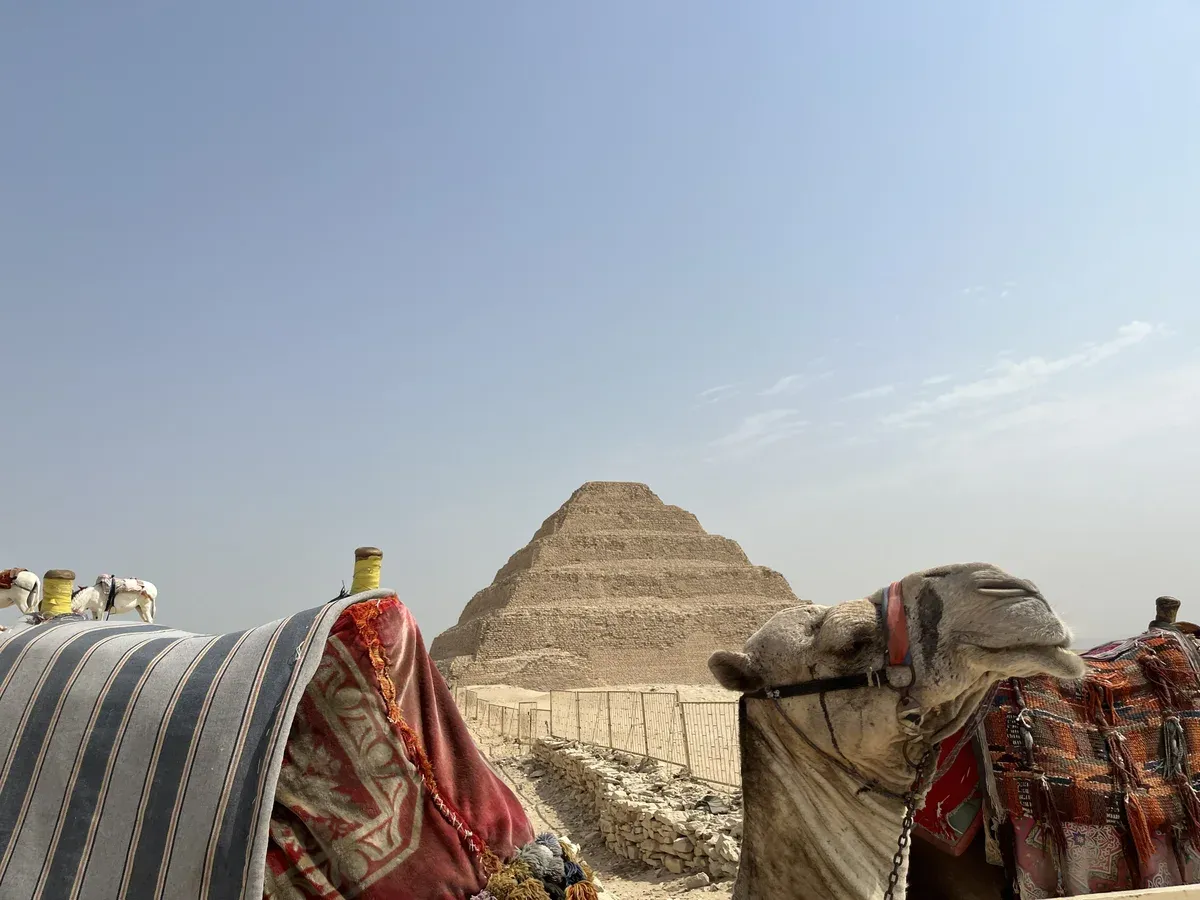
Camels wait below the Step Pyramid at Saqqara. Photo: Kristine.Justus, CC0, via Wikimedia Commons
Match the package to the sun
Early starts win for heat. The Giza Pyramids Sunrise Tour with a Camel Ride and Breakfast runs 5 hours from an early start, so you are mostly done before the strongest sun. Short and sharp works too: the Giza Pyramids Quad Bike Desert Safari with an Optional Camel Ride lasts 1 to 2 hours with 1 hour on the quad, and long trousers plus closed shoes are the only real requirements there.
If you want inside the pyramids, the Private Giza Pyramids Tour with Entry Inside the Great Pyramid is priced from $15 per person for 4 to 5 hours, or 8 hours with the museum, and the private format lets you pause in shade when you need it. The most complete single day is the Giza Pyramids, Sphinx, Saqqara and Memphis Day Tour from Cairo at $73 per person for 8 hours including pickup and drop-off, which adds Saqqara, where foreign adult entry is EGP 600 (about $10.84), and Dahshur, where it is EGP 200 (about $3.61), both open 08:00 to 16:00 with last entry per the official pages.
Arriving by air with a short connection, the Cairo Layover Tour From the Airport: Pyramids, Sphinx and Museum is built around a tight window, so wear your most comfortable walking outfit and keep a bag you can carry all day. All tours listed here include free cancellation 24 hours ahead, so you can rebook around the weather without losing money.
| Tour | Price | Duration | Best dress note |
|---|---|---|---|
| Giza Pyramids and Sphinx Private Tour with a Camel Ride | $54 per person | 4 to 8 hours, by option | Long trousers for the camel ride |
| Giza Pyramids, Sphinx and Grand Egyptian Museum Tour with Lunch | $97 per person | 7 to 8 hours | Add a layer for the cool galleries |
| Giza Pyramids, Sphinx, Saqqara and Memphis Day Tour from Cairo | $73 per person | 8 hours including pickup and drop-off | Full sun kit for three sites |
| Private Giza Pyramids Tour with Entry Inside the Great Pyramid | $15 per person | 4 to 5 hours (8 hours with the museum) | Grippy shoes for the passage |
| Giza Pyramids Sunrise Tour with a Camel Ride and Breakfast | $67 per person | 5 hours | Light jacket for the early start |
| Giza Pyramids Quad Bike Desert Safari with an Optional Camel Ride | $40 per person | 1 to 2 hours (1 hour on the quad) | Long trousers and closed shoes |
| Hurghada to Cairo Day Trip by Road: Giza Pyramids, Sphinx and Museum | $74 per person | 15 to 20 hours | Layers you can swap in the vehicle |
Sources: Egyptian Monuments Authority, Egyptian Monuments Authority, Egyptian Monuments Authority.
What to wear in Giza that locals will respect?
Wear loose clothing that covers your shoulders, chest and knees in light colours, and you will fit in comfortably with both locals and other visitors.
Giza's plateau neighbourhoods are residential and conservative. Dressing modestly is not about avoiding trouble, it is about being treated well by guides, shopkeepers and camel handlers you meet all day.
Local context in one paragraph
The pyramid complex belongs to the UNESCO World Heritage site 'Memphis and its Necropolis - the Pyramid Fields from Giza to Dahshur', inscribed in 1979, and the whole plateau is a working monument with staff, police and residents around it. Modest, light, loose clothing signals that you understand where you are, and it is also simply the most comfortable choice in the desert sun. No visitor needs traditional dress, and a hijab is not needed except inside certain mosques.
Source: UNESCO World Heritage Centre.
What to Wear at the Pyramids: FAQ
What should female tourists wear in Egypt?
Loose clothing that covers shoulders, chest and knees. Long skirts, maxi dresses and loose trousers keep you cool while staying modest, and a hijab is not needed except when entering certain mosques.
Can you wear shorts as a woman in Egypt?
You can, and you will not be stopped at the plateau gate, but loose capris or lightweight pants are cooler and protect you from hours of direct sun at Giza.
What not to wear in Egypt as a tourist?
Revealing or tight-fitting clothing, dark colours like black and navy, thin flip-flops, and bulky bags. Choose loose linen shirts, loose trousers and light colours instead.
What to wear when visiting the pyramids in Egypt?
Thick-soled hiking sandals or trainers, a hat, sunglasses and light-coloured loose clothes that cover shoulders and knees, because the plateau is open desert with rock underfoot and little shade.
Do I need a headscarf at the Giza pyramids?
No. A hijab is only needed when entering certain mosques, and there is no mosque on the standard pyramid plateau itinerary. Keep a scarf in your bag for sun cover.
Is there a dress code at the Grand Egyptian Museum?
There is no stated dress rule, but bags larger than 40 x 40 cm must be left in the cloakroom and selfie sticks, tripods and flash photography are prohibited, so bring a small bag and use your phone camera.
What shoes are best for the pyramids?
Thick-soled hiking sandals or trainers with grip. The ground is broken rock and sand, and the passages inside the pyramids are steep and low.
What to wear in Egypt for a week of sightseeing?
Five or six loose covering outfits in light colours, two or three scarves, two long-sleeved shirts, three short-sleeve items, two pairs of grippy shoes and a foldable jacket for evenings and air-conditioned rooms.
More Guides
- Cairo to Giza: How Far the Pyramids Are and How to Get There
The pyramids sit 13 to 15 km from central Cairo in 2027. The Line 2 metro takes 11 minutes. Compare every way across and see the prices.
- Giza Pyramids Facts: How Old, How Tall and Who Built Them
The pyramids were built between 2580 and 2500 BCE, over 4,500 years old. 2027 facts on age, height and builders. Compare tours.
- Giza Weather by Month and the Best Time to Visit the Pyramids
Giza weather in 2027: highs of 18.9°C in January and 35.0°C in July. Go at the 07:00 opening and compare tours.